The Internet Is Becoming Synthetic. America’s Streets Are Becoming More Valuable.
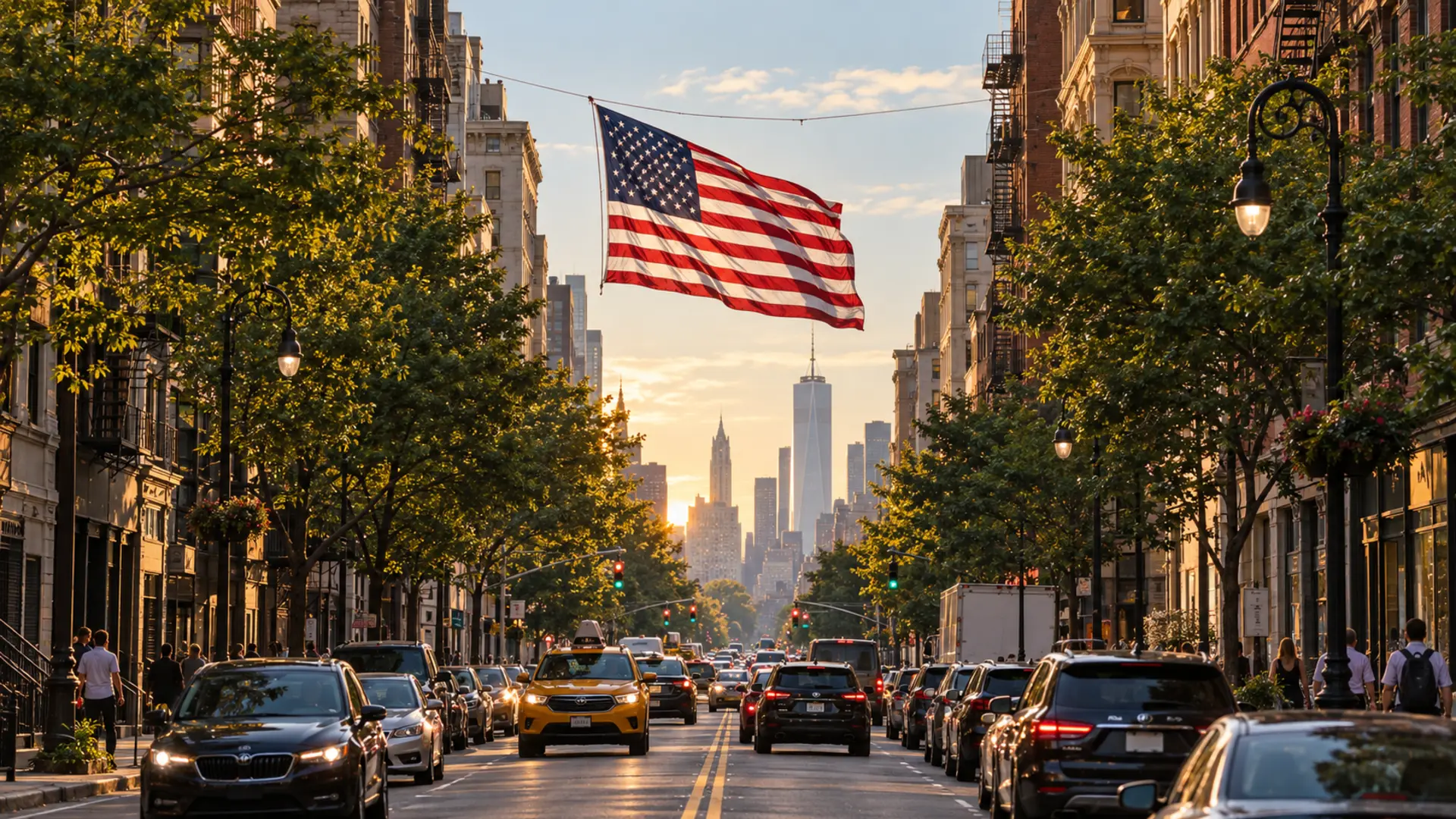
Why U.S. out-of-home advertising is booming in the age of AI
Artificial intelligence has made it possible to produce an almost unlimited supply of digital content. Images, videos, adverts and even entire personalities can now be generated in seconds.
Attention, however, remains stubbornly finite.
As feeds become more crowded and consumers grow less certain about what they are seeing online, something interesting is happening across the United States. Brands are investing more heavily in the physical world.
Billboards, transit networks, airports, shopping centres, entertainment districts and other public spaces are becoming increasingly valuable places to reach an audience. Out-of-home advertising is no longer simply holding its ground against digital media. It is growing alongside it.
The reason is not that brands have suddenly become nostalgic for traditional advertising. Modern OOH is measurable, connected, programmable and increasingly experiential. More importantly, it offers something that is becoming harder to find online: a visible presence in the real world.
The Numbers Confirm the Boom
U.S. out-of-home advertising revenue reached a record $9.46 billion in 2025, according to the Out of Home Advertising Association of America. That represented annual growth of 3.6% and completed 19 consecutive quarters of expansion.
Digital out-of-home, or DOOH, accounted for 36.3% of total revenue and grew by 10.5% during the year.
The momentum accelerated in 2026.
OOH revenue reached a record $2.12 billion during the first quarter, an increase of 7.1% year on year. Digital revenue grew by 12.9%, while printed OOH also increased by 4.1%.
The second quarter was even stronger. U.S. OOH revenue exceeded $3 billion in a single quarter for the first time, reaching $3.16 billion. That was 10.7% higher than the same period a year earlier and brought first-half growth to 9.2%.
Digital OOH increased by 18.5% during the quarter and represented 38.4% of total revenue.
These figures point to more than a cyclical advertising recovery. They suggest that the role of physical media is being re-evaluated at precisely the moment digital content is becoming easier to create.
Digital-First Brands Are Going Physical
One of the clearest signals comes from the companies increasing their OOH investment.
During the second quarter of 2026, technology and direct-to-consumer businesses represented 30% of the 100 largest U.S. OOH advertisers. Spending from the computers, software and internet category increased by almost 150% year on year.
Major advertisers included Apple, Amazon, OpenAI, Uber, DoorDash, T-Mobile and Verizon.
These companies understand digital advertising better than almost anyone. Their investment in OOH is not a rejection of online marketing. It is recognition that digital performance can be strengthened by physical visibility.
A campaign seen on a city street, inside an airport or across a transit network can prompt a search, app download, website visit or purchase later in the journey. The physical impression and the digital conversion are no longer separate events. They are parts of the same customer experience.
OOH has therefore become an increasingly useful bridge between brand building and measurable action.
AI Is Increasing the Value of Authenticity
Generative AI has dramatically lowered the cost of producing content. It has also introduced a new problem for brands: when almost anything can be created, replicated or manipulated, how does an audience decide what deserves attention?
The OAAA reports that 73% of consumers are uncertain about what is real in an increasingly AI-shaped media environment.
Research published by the Interactive Advertising Bureau also found that 39% of Gen Z consumers felt negatively about AI-generated advertising, almost twice the proportion recorded among Millennials. More than half of respondents wanted disclosure when an advertisement was completely AI-generated or used AI-created imagery or video.
This does not mean audiences will reject AI. It means brands will need to use it transparently and thoughtfully.
Physical media can help establish credibility because it exists in a shared, publicly visible environment. A major installation in Times Square, a campaign throughout a subway network or an interactive display inside a flagship store requires a real commitment of space, capital and creative intent.
A physical placement does not automatically make an advertising claim true. It does, however, create a sense of presence that is more difficult to achieve through another fleeting item in a personalised feed.
As synthetic content becomes abundant, reality gains a premium.
Public Presence Has Become a Form of Brand Proof
Social media can deliver enormous reach, but much of that reach is private, fragmented and algorithmically selected. Two people standing beside one another may inhabit entirely different media environments.
OOH works differently.
A billboard, display or installation becomes part of a place. It can be encountered by commuters, residents, tourists and shoppers at the same time. People can photograph it, discuss it and share it online, but the original experience is public.
That shared quality matters.
An ambitious OOH campaign can signal that a brand is established enough to occupy a prominent location. It can provide cultural relevance by appearing near an event, neighbourhood or moment that people already care about. It can also create social content without being designed solely for a social feed.
The strongest physical campaigns now operate in both worlds. They make an immediate impression in person, then generate additional attention through photographs, video and conversation online.
OOH Has Become Digitally Intelligent
The growth of OOH is also being supported by major improvements in technology.
Modern digital displays can change creative according to time, location, weather, stock availability, transport conditions or live events. A single screen can deliver different messages throughout the day rather than showing one fixed campaign for several weeks.
Programmatic platforms make it possible to buy and optimise digital OOH inventory as part of a wider media strategy. Advertisers can activate campaigns quickly, target relevant environments and coordinate physical placements with mobile, connected television, retail media and other digital channels.
Measurement has also advanced. Advertisers can increasingly evaluate outcomes such as footfall, website activity, app engagement and store visits, provided that data is collected and used responsibly.
This combination gives brands many of the advantages associated with digital advertising while preserving the scale, visibility and physical context of OOH.
The medium is becoming more intelligent without losing its public character.
Growth Is Strongest Where People Move and Gather
The fastest-growing OOH environments reveal another important shift.
In the second quarter of 2026, U.S. transit advertising revenue increased by 23.9%. Place-based advertising, which includes screens and displays located inside specific venues, grew by 19.3%.
These are not passive locations. They are places where people wait, travel, shop, work and socialise.
Airports connect brands with passengers who may have time to explore products or services before departure. Shopping centres can place media close to the point of purchase. Stadiums and entertainment venues offer access to emotionally engaged audiences. Transport hubs create opportunities for information, navigation and advertising to coexist.
OOH becomes particularly powerful when the medium contributes something useful to the environment rather than simply occupying it.
That might mean helping a visitor find a gate, introducing a product, translating information, answering a question or creating an unexpected moment worth remembering.
This is where the distinction between an advertisement and an experience begins to disappear.
From Digital Displays to Intelligent Experiences
The next stage of OOH will not be defined by brighter screens alone.
Interactive displays, spatial content and AI-powered brand representatives can turn a media placement into a two-way encounter. Instead of watching a predetermined loop, a visitor could approach a display, ask a question and receive a relevant response.
A retail customer might explore a product range with a virtual specialist. An airport passenger could request directions in their preferred language. A hotel guest might receive local recommendations. A stadium visitor could interact with a sponsor’s character or ambassador before an event.
Holographic display technology gives these interactions a stronger sense of physical presence. The experience remains digital, but it appears to occupy the same environment as the audience.
For Miirage, this creates an opportunity that extends beyond conventional signage. A holographic AI representative can welcome visitors, present products, provide wayfinding, answer common questions and deliver branded content from a single physical installation.
The most effective applications will not use holograms simply as a visual novelty. They will combine spectacle with service.
The Display Can Become Part of the Destination
Traditional OOH competes for a few seconds of attention. Experiential OOH can give people a reason to approach, interact and stay.
That changes the role of the display.
Instead of functioning only as rented media space, it can become part of a venue’s customer experience. The same installation could support visitors when assistance is required and present relevant brand content between interactions.
For retailers, that creates a new point of contact inside the store. For airports and transport operators, it could combine navigation, passenger information and commercial messaging. For exhibitions and live events, it can provide a distinctive host that operates consistently throughout the day.
The commercial opportunity is not limited to impressions. It includes engagement, utility and the memorability of the encounter.
This is particularly relevant to brands trying to stand out in premium physical environments. A holographic AI experience can provide the impact of an installation while remaining adaptable through software, content and language updates.
Innovation Will Need Responsible Design
As OOH becomes more interactive, the industry will need to protect the trust that makes physical media valuable in the first place.
Audiences should understand when they are interacting with an AI system. Data collection should be proportionate, transparent and privacy-conscious. Experiences should provide clear value rather than using technology simply because it is available.
The IAB’s AI Transparency and Disclosure Standards recommend disclosure based on the potential risk of different AI applications, including synthetic voices, digital replicas and AI-powered consumer interactions.
That principle is especially important in public spaces. The objective should be to create helpful, compelling encounters without making people feel watched or misled.
Brands that approach holographic AI with restraint and clarity will be better positioned to build lasting confidence.
The Physical World Is Becoming Premium Media
The internet is not disappearing, and OOH will not replace digital advertising. The two are becoming more closely connected.
Yet the economics of attention are changing.
AI can produce more content than any audience could ever consume. Every digital channel will become more crowded with competent images, videos and messages. In that environment, the ability to create something real, public and difficult to ignore becomes more valuable.
America’s OOH boom reflects that shift.
The winners will not necessarily be the brands with the largest screens. They will be the ones that understand the character of the place, provide a reason to engage and connect the physical experience to a wider customer journey.
Billboards will remain important. Digital screens will keep growing. But the most exciting opportunity may lie in displays that can welcome, respond, explain and perform.
In an age of unlimited synthetic content, the physical world is becoming the most valuable screen of all.Further Reading
- OAAA: U.S. OOH Advertising Revenue Reaches a Record $9.46 Billion
- OAAA: OOH Reaches a New First-Quarter High in 2026
- OAAA: U.S. OOH Revenue Exceeds $3 Billion in a Quarter for the First Time
- OAAA: Apple, Verizon and Coca-Cola Lead the Largest U.S. OOH Advertisers
- OAAA: Six Major Takeaways for the Future of OOH
- OAAA: Programmatic Out-of-Home Advertising Resources
- OAAA: 98% of Marketers Say OOH Is Foundational to Connected Commerce
- IAB: AI Transparency and Disclosure Framework
- IAB: AI Transparency and Disclosure Standards